My sister works in the gardens and she will be interpreting one of the five heritage gardens for us.
The gardens were started in 1983 as an integral part of an education program instituted by the conservation district. The decision was made to showcase the history of European settlement in this area by recreating their gardens. The gardens represent the population that lived in this northern Illinois area in the early 1800's.
My favorite is the Potawatomi garden which represents the native people who lived in the area when settlers first began arriving. The other four major ethnic groups include German, Norwegian, Scottish and Yankee.
The staff researched and planted heirloom varieties that would have been authentic for each group. Only open pollinated heirloom varieties are included. It's like an open air growing, green museum!
Let's get started because we've got lots of ground to cover. I hope you brought some comfortable shoes.
There are several nice gardens near the administration building but we're going to concentrate on the ethnic gardens today.
There's a nice pathway leading to the first garden. Just to the right of the pathway we find the German garden.
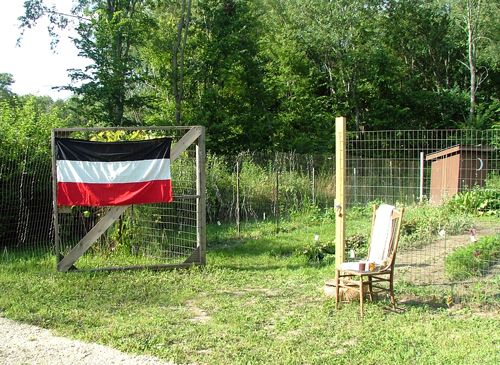
The German garden reflects the sensibilities of the early German settlers. They put all the space around their homes to use growing useful plants. Some of the varieties grown are: “Old German tomato”, Yellow Hinkelhatz Hot Pepper, Forellenschuloss Lettuce, Huberschmidt ground cherry, French breakfast radish, Early blood turnip beet, Black turtle soup bean, Purple and white kohlrabi, West Indian gherkin cucumber, Mangle Wertzel beet, Virginia smoking tobacco.
A little ways down the pathway is the Murray cabin, a mid-1800's typical woodlands cabin. It was necessary to protect yourself from the northern Illinois elements, windy, hot in the summer and freezing cold in the winter. There were plenty of vermin to deal with and it was generally unpleasant.
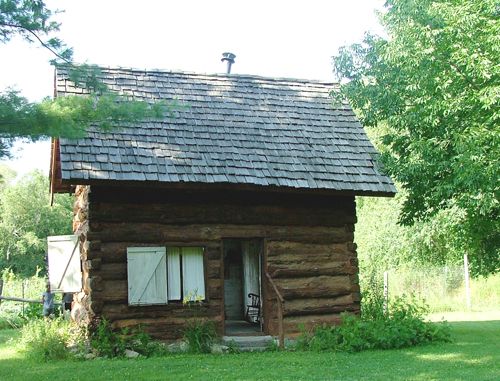
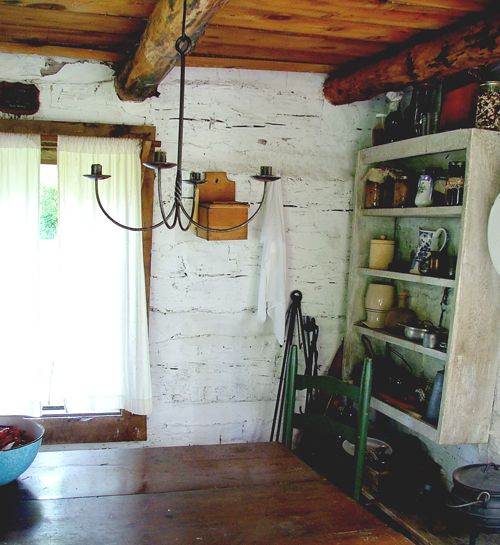
Although the interior looks pleasant, I cannot imagine living with an entire family in a space smaller than my bedroom. The interior walls are calcimined in an attempt to reflect light and create a cheery interior. This would have been a typical cabin inhabited by a Scottish immigrant family.
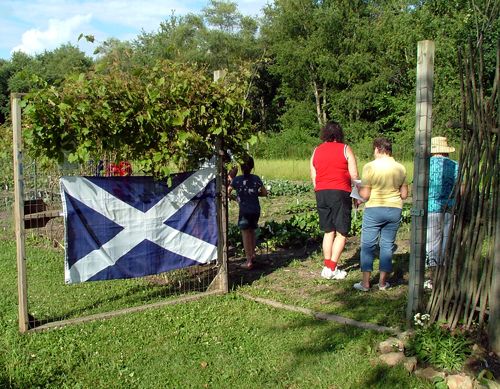
Behind the Murray cabin is the Scottish garden. The Heritage Gardens are lucky to have the Walker Shortbread company as a sponsor of this garden.
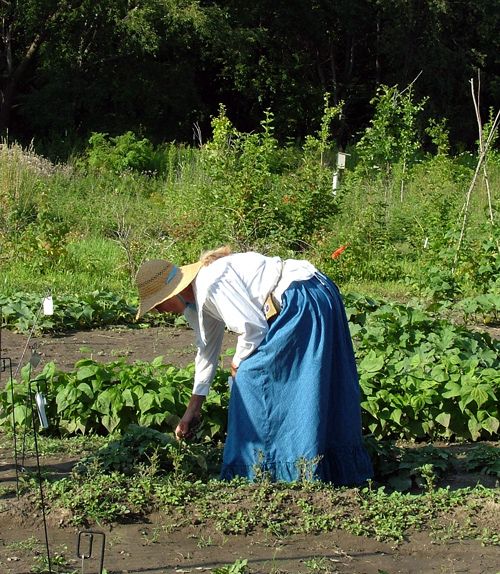
One of the interpreters tends to the garden.
Have you ever seen a wattle fence? Here's a good example.
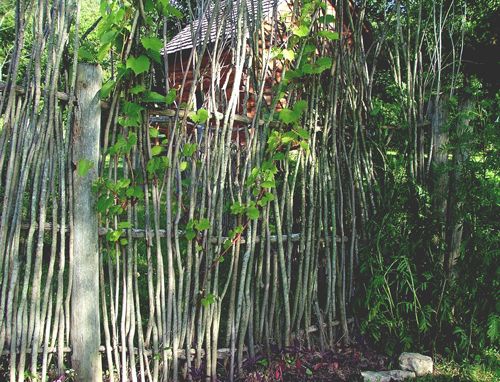
Immigrants were forced to used what they had on hand. A wattle fence is constructed using tall sticks, bound together. It was necessary to protect their gardens from animals, pests and weather. Losing a crop could mean starvation.
Let's continue along the path to the Norwegian garden.
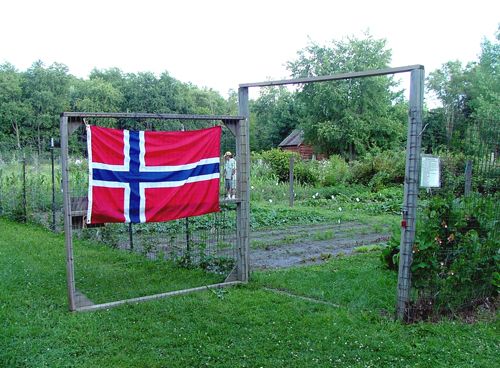
There were many Norwegians who settled in northern Illinois. They tended to locate their gardens a distance from their house and grew lots of root vegetables, which stored well.
The Yankee Garden was copied from an actual plan published in the 1855 Wisconsin-Iowa Farmer by Mr. Powell of Janesville, Wisconsin. The Yankees were more experimental than the immigrants, who tended to hold on to their old world ways.
I loved the white fence with the corn planted behind.
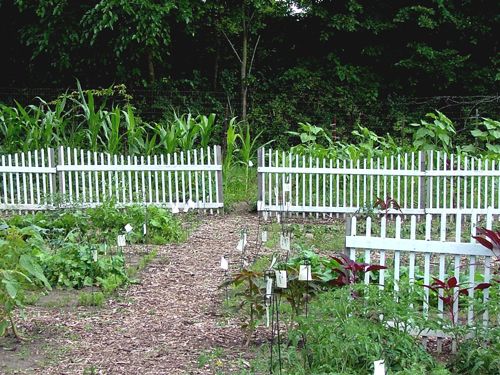
The next garden is my favorite, the Potawatomi Garden. This is an example of the garden used by the native woodlands tribes. Central to these gardens were the three sisters - Corn, beans and squash. The corn would be planted first and allowed to take hold. The beans would be planted and the established corn plants would serve as bean poles. The squash would be planted last and would spread their prickly vines along the garden floor, discouraging animals from raiding the garden.
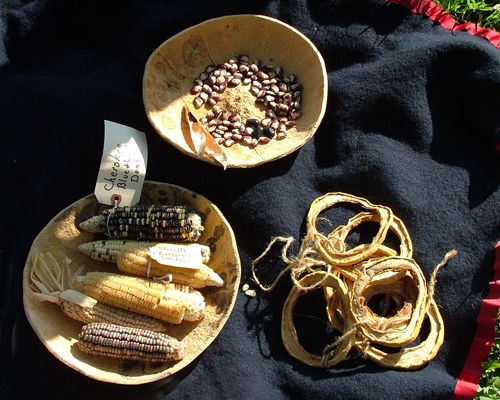
Scientific studies have proven that a diet of the three sisters is sufficient to provide all the amino acids required for a healthy life.
The immigrants occasionally married a native and the resulting people were called mete'. Here's my sister Pam. I suppose we could be considered mete', since our great-grandmother (a Seminole) married a white man in the early 1900's.
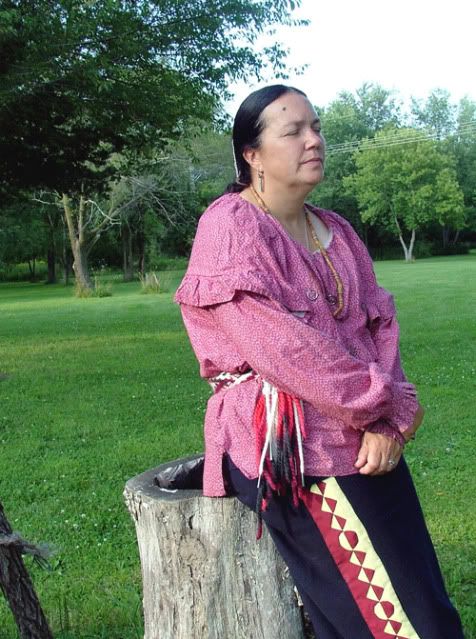
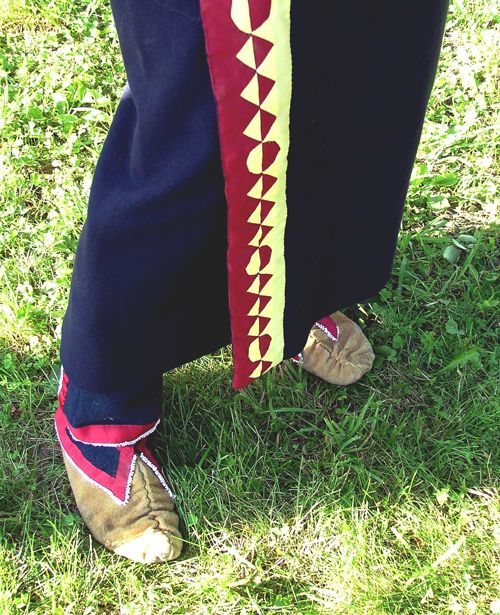
She's incredibly talented. She made this skirt with it's traditional ribbonwork border. (This is not the clothing of our grandmother's tribe, but reflects the woodlands tribes). Oh, she made the mocassins also.
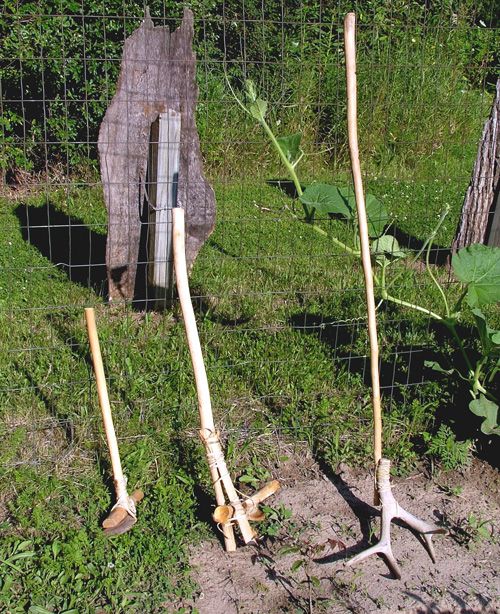
Here are handcrafted gardening tools.
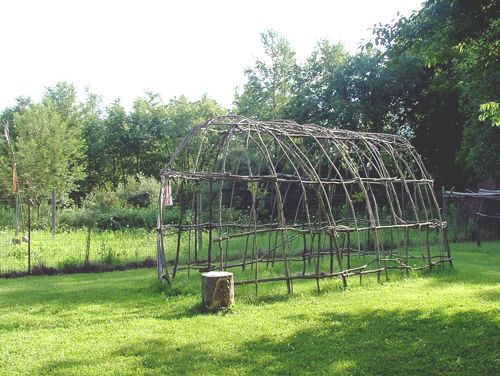
In the summertime the Potawatomi would live in an open aired structure but in the winter they would live in a wigwam like this one. It would be covered with mats or hides.
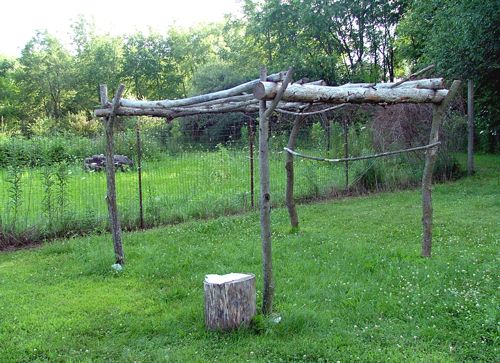
This is a Potawatomi drying rack. Food was dried and preserved for later use.
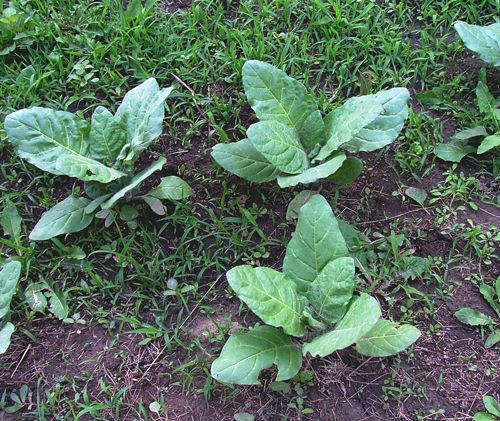
The Indians grew tobacco, which was grown in a circle and considered sacred. They believed that the rising smoke carried one's prayers to the Great Spirit. It was used for religious and other special purposes. This is Nicotiana rustica, which once grew wild in the midwest.
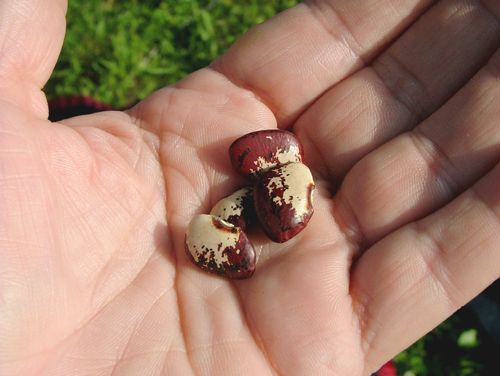
These are beans grown by the Indians known as Black Coat beans, named after Catholic priests traveling with the French.
Pam holds a string of dried pumpkin slices.
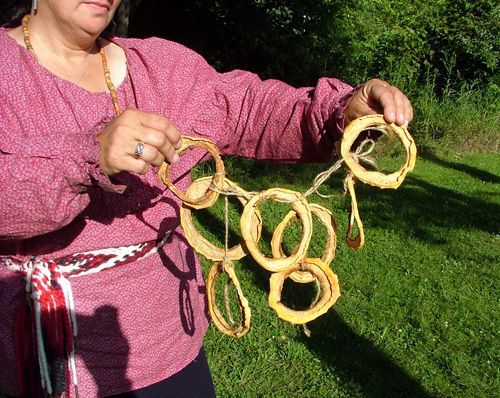
These were added to soups or stews, absorb the liquid and thicken the mixture.
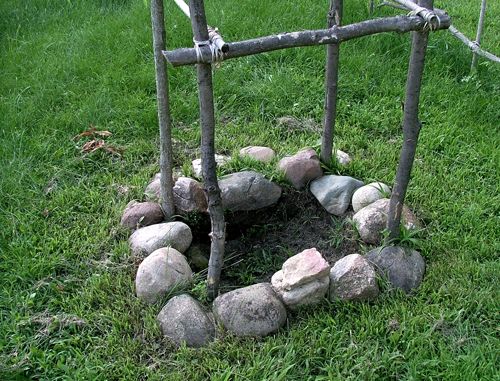
Fire pit inside the wigwam area.
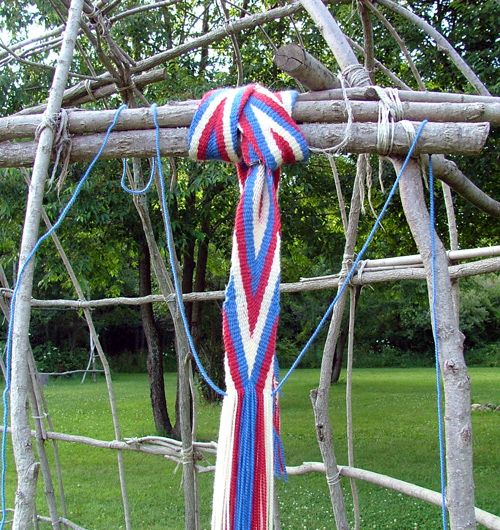
Pam demonstrates finger weaving a new sash for her period clothing.
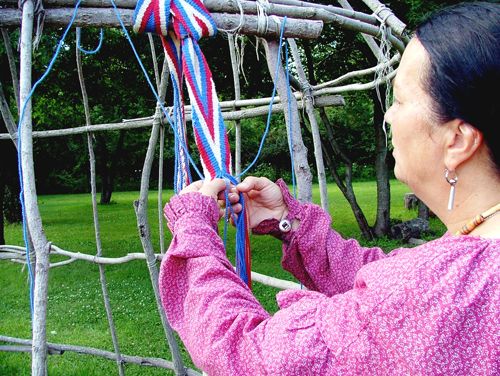
She's making progress.
Thanks so much for joining me on this walk through Boone County's Conservation District Heritage Gardens.
My sister publishes a blog chronicling the year-round progress of the gardens.
A Year in the Heritage Gardens.
If you're interested in reading a book about the Norwegian immigrant experience I recommend:
Giants in the Earth by Ole Edvart Rolvaag

- - - - - - - - - - - - - - - - - - - - - - - - - - - - - - - - - - - - - - - - - - - - - - - - - - - - - - - - - -
HERITAGE GARDENS FIELD TRIP GIVEAWAY

Thanks to my sister Pam, I'll be giving away the Three Sisters. Included is one package of Black Turtle Beans, one Mesquakie Dent Corn and a Winter Luxury Pie Pumpkin. Also, courtesy of Walker Shortbread you'll be receiving a small package of their authentic shortbread.
You know the drill. Leave me a comment before 6 p.m. on Sunday, August 2nd. The winner will be announced at Monday Morning's Staff Meeting.
Good luck.
- - - - - - - - - - - - - - - - - - - - - - - - - - - - - - - - - - - - - - - - - - - - - - - - - - - - - - - - - - - - -
Further resources:
RIBBON WORK TUTORIAL